When people talk about artificial intelligence, the conversation often focuses on innovation, automation, and economic growth. However, another equally important topic is privacy. As AI systems collect and analyse vast amounts of data, protecting personal information becomes a major concern. Finland has emerged as one of the countries taking a thoughtful and user-focused approach to AI privacy, combining technological progress with strong ethical standards.
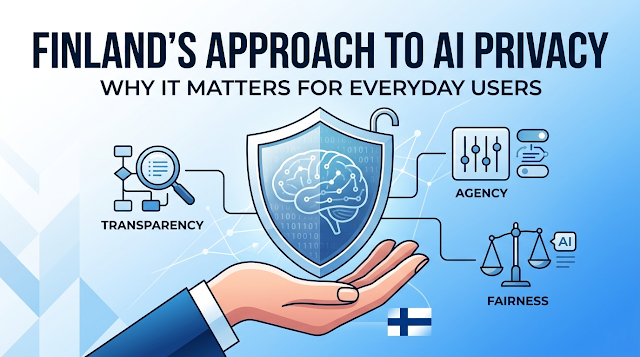
From the perspective of an everyday user, Finland’s model offers an interesting example of how technology and privacy can coexist.
A Culture of Trust and Transparency
Finland is known for its high level of public trust in institutions. This trust does not happen by accident. It comes from consistent transparency, clear policies, and strong legal protections for citizens. When it comes to AI, this culture influences how technologies are developed and deployed.
For users, transparency means understanding how their data is used. Many Finnish digital services clearly explain what information is collected, why it is needed, and how it will be processed. Instead of hiding these details in complicated legal language, organisations increasingly aim to make privacy policies understandable for ordinary people.
This approach helps users feel more confident about using AI-powered tools, whether they are healthcare systems, online services, or smart city technologies.
Strong Legal Foundations
One of the key reasons Finland has gained attention for AI privacy is its strong legal framework. As a member of the European Union, Finland follows the General Data Protection Regulation (GDPR), which is considered one of the most comprehensive data protection laws in the world.
For users, GDPR provides several important rights. People have the right to know what data organisations hold about them. They can request corrections if information is inaccurate, and in some cases, they can ask for their data to be deleted. They also have the right to understand automated decision-making systems that affect them.
These protections are especially important when AI systems are involved. Algorithms often rely on large datasets, and without proper safeguards, personal information could easily be misused. Finland’s strict adherence to GDPR ensures that companies must treat user data with care.
Ethical AI Development
Beyond legal requirements, Finland also places a strong emphasis on ethical AI. Universities, research institutions, and government organisations work together to create guidelines that prioritise human rights and privacy.
One example is the country’s focus on “human-centred AI.” This idea emphasises that technology should serve people rather than replace or exploit them. Developers are encouraged to consider privacy, fairness, and transparency during the design process instead of addressing these concerns only after systems are already built.
For users, this means AI tools are more likely to be designed with privacy protections from the beginning. It reduces the risk of hidden data collection or unexpected uses of personal information.
Education and Public Awareness
Another reason Finland stands out in the AI privacy conversation is its commitment to public education. The country understands that privacy protection is not only about laws and technology; it also depends on informed citizens.
Programs such as the well-known “Elements of AI” course have introduced thousands of people around the world to the basics of artificial intelligence. In Finland, similar initiatives help citizens understand how AI works and what it means for their personal data.
From a user perspective, this knowledge is empowering. When people understand how algorithms operate, they can make better decisions about the digital services they choose to use. They also become more aware of their rights and how to protect their personal information.
AI in Public Services
Finland uses AI in several public sectors, including healthcare, transportation, and government services. While these applications can improve efficiency and convenience, they also involve sensitive data.
For example, healthcare systems may use AI to analyse patient information and help doctors make better diagnoses. In such cases, privacy is especially critical because medical data is extremely personal.
Finnish institutions address this challenge through strict security measures and clear regulations. Data is often anonymised before it is used for research or AI training. This means personal identifiers are removed so that individuals cannot easily be traced from the dataset.
For users, this approach provides reassurance that their information contributes to technological advancement without compromising their privacy.
Balancing Innovation and Protection
One of the biggest challenges in AI development is finding the right balance between innovation and privacy. Too many restrictions could slow down technological progress, while too few protections could expose users to risks.
Finland’s strategy focuses on responsible innovation. Instead of treating privacy as an obstacle, policymakers and developers view it as a core part of building trustworthy technology.
This perspective benefits users in the long term. When people trust digital systems, they are more willing to adopt new technologies. Trust becomes a foundation for sustainable innovation.
The Role of Companies and Startups
Finland has a growing technology sector, including many startups working with artificial intelligence. These companies operate within the same privacy-focused environment shaped by national policies and European regulations.
For startups, this means building privacy considerations into their products from the beginning. Many companies adopt practices such as data minimisation, which involves collecting only the information that is truly necessary for a service to function.
From the user’s point of view, this approach reduces unnecessary data exposure. It also creates a healthier digital ecosystem where privacy is treated as a competitive advantage rather than an afterthought.
Challenges and Future Considerations
Despite its strong reputation, Finland still faces challenges in AI privacy. Technology evolves quickly, and regulations must constantly adapt to keep pace with new developments.
Issues such as facial recognition, large-scale data analytics, and cross-border data sharing raise complex questions. Policymakers must carefully evaluate how these technologies affect individual rights.
For users, staying informed remains essential. Even in countries with strong protections, people need to understand how their data is used and take advantage of the rights available to them.
Why Finland’s Model Matters
Finland’s approach to AI privacy offers valuable lessons for other countries. By combining strong legal protections, ethical guidelines, public education, and transparent governance, the country demonstrates that technological progress does not have to come at the cost of personal privacy.
From a user-first perspective, this model emphasises respect for individuals. AI systems should enhance people’s lives while protecting their personal information and autonomy.
As artificial intelligence becomes more integrated into everyday life, the importance of privacy will only grow. Finland’s example shows that with the right balance of innovation, responsibility, and trust, it is possible to build an AI-driven future that still puts users first.